

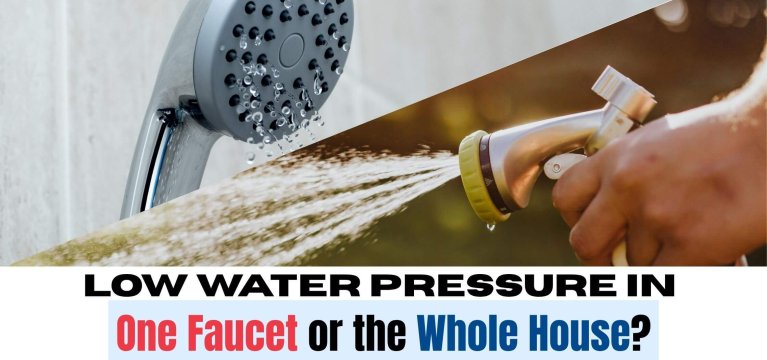
Have you ever turned on the shower and noticed that the water was barely flowing? Maybe one faucet seems weaker than usual, or perhaps the water pressure drops throughout your entire home whenever someone starts the washing machine.
Low water pressure does not always point to the same plumbing problem. Where the pressure changes, when it happens, and whether it started suddenly or gradually can all help narrow down the cause.
Before assuming the worst, start by paying attention to how the problem is affecting your home.
Start With One Simple Question: Where Is the Pressure Low?
Turn on a few different faucets and fixtures throughout your home. Check both hot and cold water, and notice whether the pressure changes when more than one fixture is running.
This quick check can help you determine whether the problem is limited to one fixture or may involve a larger part of your plumbing system.
If the Pressure Is Low at One Faucet or Shower
When only one faucet or shower has weak water flow, the problem may be located at that fixture rather than within your entire plumbing system.
Minerals and debris can collect inside faucet aerators and showerheads over time. This buildup restricts water flow and can make it feel as though the water pressure has dropped.
Cleaning or replacing the aerator or showerhead may solve the problem. If the flow remains weak, the fixture, supply line, or shutoff valve may need to be inspected.
If Only the Hot Water Has Low Pressure
When the cold water flows normally but the hot water does not, the problem may be connected to your water heater or the pipes and valves serving the hot-water system.
A partially closed valve, mineral buildup, or another water-heater issue could restrict the flow of hot water. Because water heaters involve pressurized water and may also use gas or electricity, it is best to have a plumbing professional inspect the system if the cause is not obvious.
If the Entire House Has Low Water Pressure
Low pressure at several faucets, showers, and appliances usually points to a problem beyond one individual fixture.
Possible causes include a malfunctioning water-pressure regulator, a main shutoff valve that is not fully open, aging pipes with internal buildup, or an issue affecting the main water line entering your home.
If plumbing work was recently completed, check whether the main shutoff valve was fully reopened. Do not force a valve that is stuck or difficult to turn because an older valve could be damaged.
If the Pressure Drops When Several Fixtures Are Running
Does the shower become weaker when the washing machine starts or someone turns on another faucet?
Some change in water flow can be normal when multiple fixtures are being used. However, a dramatic pressure drop may mean your plumbing system cannot deliver enough water to several fixtures at once.
Mineral buildup, aging or restricted pipes, a pressure-regulator problem, or an issue with the main water supply could contribute to this type of pressure change.
If the Pressure Dropped Suddenly
A sudden pressure change deserves attention, especially when it affects your entire home.
It may be related to a damaged pipe, a water-line problem, a failed pressure regulator, or temporary work being completed by your local water utility. If the pressure drop is accompanied by damp areas, running-water sounds, or an unexplained increase in your water bill, a hidden water leak may be involved.
If you suspect a significant leak or pipe break, turn off your home’s main water supply if it is safe to do so and contact a plumber as soon as possible.
If the Pressure Has Gradually Become Weaker
Water pressure that slowly decreases over months or years can be associated with aging plumbing.
Older pipes may develop corrosion or mineral buildup that reduces the space available for water to move through them. Depending on the condition of the pipes, you may also notice discolored water or changes in water quality.
A professional inspection can help determine whether the restriction is limited to one area or whether portions of the plumbing system may need to be repaired or replaced.
If Your Neighbors Have the Same Problem
Not every pressure problem begins inside your home.
If your entire house suddenly has low pressure, ask whether nearby neighbors are experiencing the same issue. Local water-main work, a temporary supply interruption, or another utility problem may be affecting the area.
If the problem only affects your property or continues after the neighborhood pressure returns to normal, the cause may be somewhere within your plumbing system.
When Should You Call a Plumber?
A clogged aerator may be an easy fix, but some pressure problems require a closer look. Consider calling a plumber when:
- Several fixtures have low pressure
- The pressure suddenly drops without an explanation
- Only the hot water is affected
- The problem keeps returning
- You notice damp areas, water stains, or running-water sounds
- Your water bill increases unexpectedly
- Your water appears rusty or discolored
The sooner the cause is identified, the easier it may be to prevent water damage or a more disruptive repair.
Let Plumbing 911 Help Restore Your Water Pressure
You do not have to guess what is causing weak water flow in your home.
Plumbing 911 provides full-service residential and commercial plumbing throughout Northeast Ohio, including help with low water pressure, leak detection, pipe repairs, water-line repairs and replacements, water heaters, drains, and more.
One call, we handle it all!
Contact Plumbing 911 today to schedule an appointment and get your water flowing properly again.