

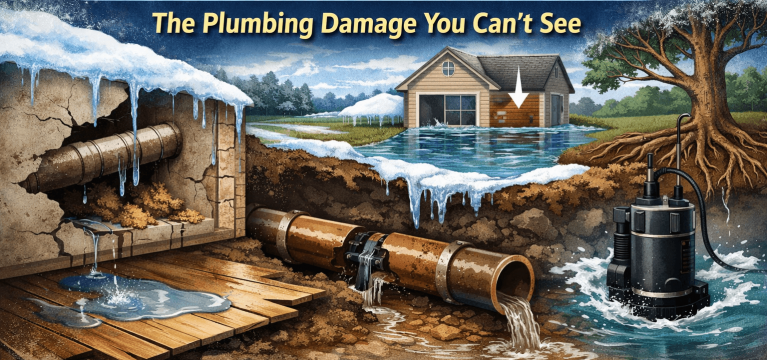
When winter ends, most homeowners look for signs of damage they can spot — cracked driveways, roof wear, or leftover debris from snowstorms. But some of the most serious damage is not visible at all.
Your plumbing system goes through a lot during winter. Freezing temperatures, expanding pipes, and shifting ground all put stress on it. By the time spring arrives, the real problems are often already there — just hidden.
Hidden Leaks from Winter Stress
Not every pipe that struggles in winter bursts.
In many cases, pipes expand and contract just enough to weaken connections or create small cracks. These issues may not cause immediate flooding, but they can slowly leak behind walls, under floors, or in ceilings.
At first, everything seems fine. Then over time, you might notice:
- Higher water bills
- Musty smells
- Warped flooring or drywall
- Reduced water pressure
By the time these signs appear, the damage has often been building for weeks.
Hidden leaks are one of the most common issues we see heading into spring — and one of the easiest to overlook until they become expensive.
Sewer Lines Under Pressure from the Thaw
As the ground freezes in winter, it hardens and compresses. When temperatures rise, that same ground begins to shift, soften, and expand.
This freeze-thaw cycle puts pressure on underground sewer lines.
Even if your sewer line was functioning perfectly in the fall, winter conditions can lead to:
- Small cracks or misalignments
- Increased blockages from debris movement
- Tree root intrusion as roots search for moisture
- Slower drainage or recurring backups
Spring rain only adds more stress to an already strained system.
Many homeowners do not connect sewer issues to winter, but the reality is that problems often begin below the surface long before a backup happens inside the home.
Sump Pumps That Have Already Been Overworked
Your sump pump is your home’s first line of defense against water intrusion — especially in Northeast Ohio where melting snow and spring rain can quickly saturate the ground.
The problem is, by the time spring hits, your sump pump may already be worn down.
Throughout winter, it may have been:
- Handling melting snow during temperature swings
- Running more frequently than usual
- Dealing with partially frozen discharge lines
By early spring, when heavy rain arrives, your sump pump is expected to perform at its best — even though it has already been working overtime.
If it fails, you may not find out until water starts collecting where it should not.
Why Spring Is the Most Important Time to Check Your Plumbing
The biggest issue with post-winter plumbing damage is that it often goes unnoticed — until it becomes an emergency.
What starts as:
- A small hidden leak
- A minor sewer line shift
- A slightly weakened sump pump
Can quickly turn into:
- Water damage inside walls or ceilings
- Sewage backups
- Basement flooding
Spring is the ideal time to catch these issues early, before heavier usage and seasonal rain make them worse.
A professional plumbing inspection can help identify:
- Early signs of leaks
- Sewer line concerns before backups occur
- Sump pump performance and reliability
Do Not Wait for a Problem to Show Itself
One of the biggest misconceptions homeowners have is that if nothing looks wrong, everything must be fine.
With plumbing, that is rarely the case.
The damage winter leaves behind is often quiet. It builds slowly. And it tends to show up at the worst possible time — during a storm, a busy week, or when your system is under the most pressure.
Taking a proactive approach in the spring can save you from unexpected repairs, water damage, and stress later on.